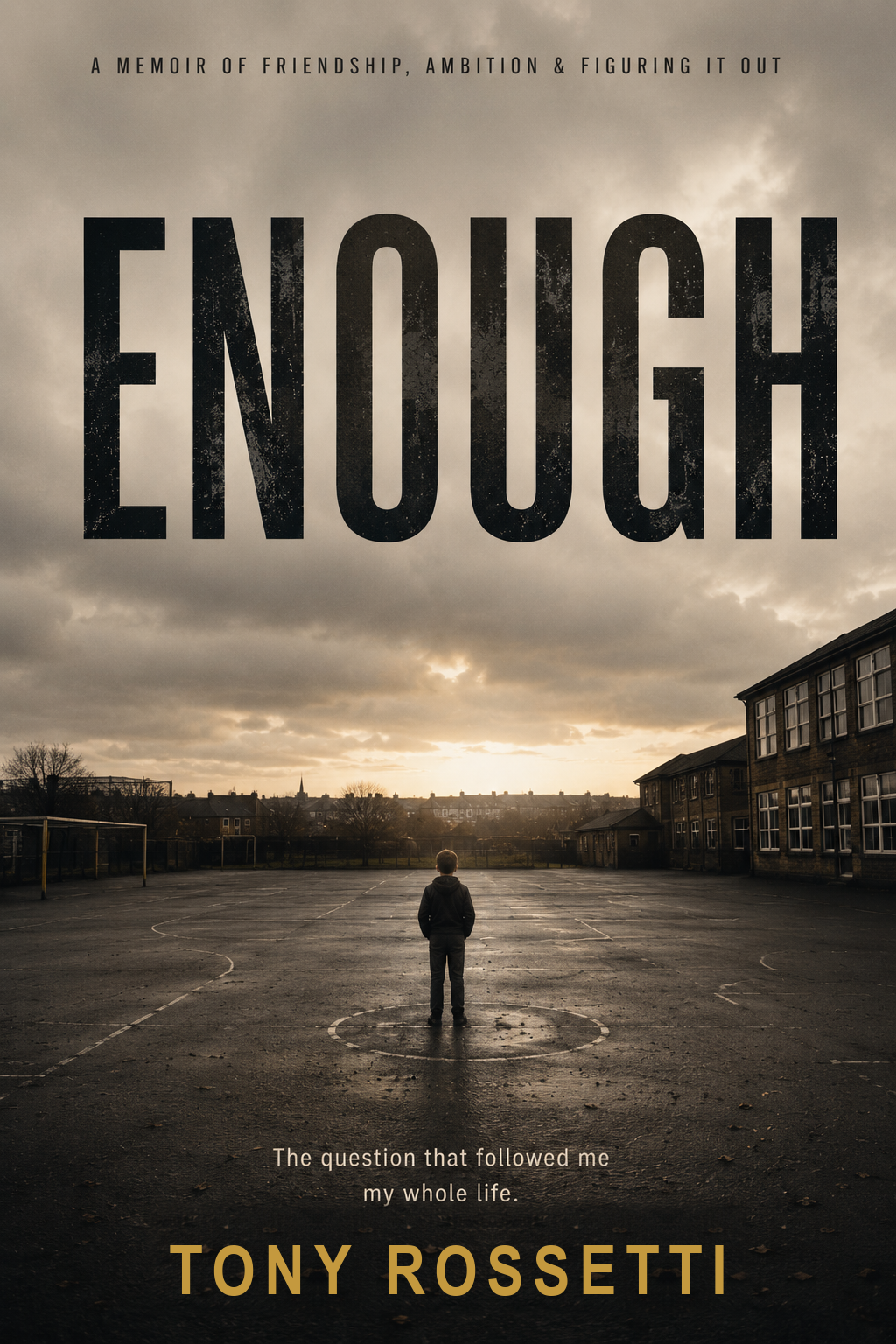
A knock at the door, thirty years in the making
A middle-aged Scottish man climbs into a boxing ring to fight a man half his age. As he waits for the bell, memories pull him backwards through decades of friendship, family, mistakes, love and grief. What begins as a story about growing up becomes a story about belonging.
T doesn't experience his own history as a timeline. He experiences it as a register of the people who built him — and, without knowing it, the people he built in return. A young woman on a doorstep is about to ask him a question that undoes fifty-one years of thinking he had it all worked out.
The reader should be laughing for half the chapter before they realise their heart's been broken.
Coatbridge, Glasgow, the Cellar, Memory Lane — a world you can smell, not just read.
Not a memoir. Not a confession. A witness account, telling the truth sideways.
Cold Open
The doorbell went while I was making toast.
Not exactly the sort of sentence you'd expect to change your life, is it? But that's the thing about mornings like that one. They don't warn you. It was coffee, toast, the radio mumbling away to itself somewhere in the background. The sort of morning you don't remember because you're not supposed to.
I had a butter knife in my hand. Greasy, half-used, toast waiting on the counter behind me. The bell went again, and I remember doing the maths without even meaning to. Too early for deliveries. Too late for salesmen. And nobody I knew ever just turned up at the door anymore. People text. People call. People ask. They don't arrive unannounced, not unless something's happened.
I walked through the hall still holding the knife, because that's what people do. You don't expect your life to change while you're carrying cutlery.
I opened the door.
There was a young woman standing there. Mid-twenties, maybe. Old enough to look like she'd travelled a long way. Young enough to look like she wished she hadn't. Beside her stood a wee boy, five or six at most, clutching a soft toy that had clearly been loved to death.
The young woman looked at me. Then at the knife. Then back at me. I looked at it too.
"Toast," I said.
She smiled. Not because it was funny. Because sometimes people smile when they don't know what else to do.
"Are you T?" she asked.
Nobody had called me that in years. Not properly. Not like that.
"Aye," I said. "Depends who's asking."
She hesitated. The wee boy moved a little closer to her. The young woman took a breath — the kind people take when they've practised a conversation in their head a hundred times, only to forget every word the second the moment arrives. Then she reached into her bag.
I suddenly became aware of ridiculous things. The coffee cooling in the kitchen. The crumbs on the worktop. The butter softening beside the toaster. The fact I was standing in my own doorway holding a butter knife, trying to look like a normal person.
She pulled out a photograph. Folded, creased, handled often. Important enough to carry around.
She held it towards me. I didn't take it straight away.
"It's okay," she said quietly. "You can look."
I took it from her. A group photograph, old enough to belong to another version of my life. Young faces. Arms over shoulders. People who still believed there was always going to be more time. I recognised myself immediately. You always do. Even when you barely recognise the person.
I looked back up at her. She was watching me. Waiting. The wee boy looked up at me too, like he'd known me forever. Somewhere in the house a dog barked.
"I know this sounds mad," the young woman said. "And I'm sorry if I'm wrong."
I said nothing. For once.
She swallowed. Took another breath. The wee boy squeezed her hand.
And then she said it.
"I think you might be my dad."
Two chapters from finished
Be a beta reader
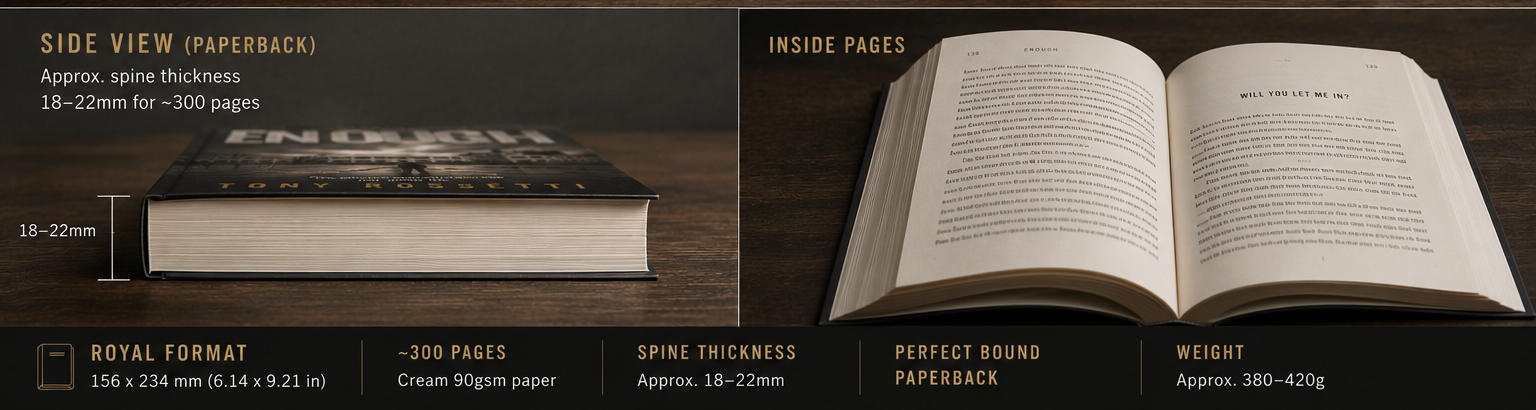
When the last two chapters are done, a small number of people get the whole thing before anyone else — the full manuscript, start to finish, months ahead of publication.
- The complete novel as a PDF or ePub, yours to read at your own pace.
- No obligation and no forms to fill in — read it, then tell me what you actually thought.
- Everyone who reads it early gets named in the back of the finished book, if they want to be.
Places are limited and I read every reply myself. If it's not a fit this time, you'll hear about the launch first either way.
Just want to know when it lands?
Not ready to read the whole thing? Get one email when it's finished and one when it's out. Nothing else, no spam, unsubscribe whenever.